
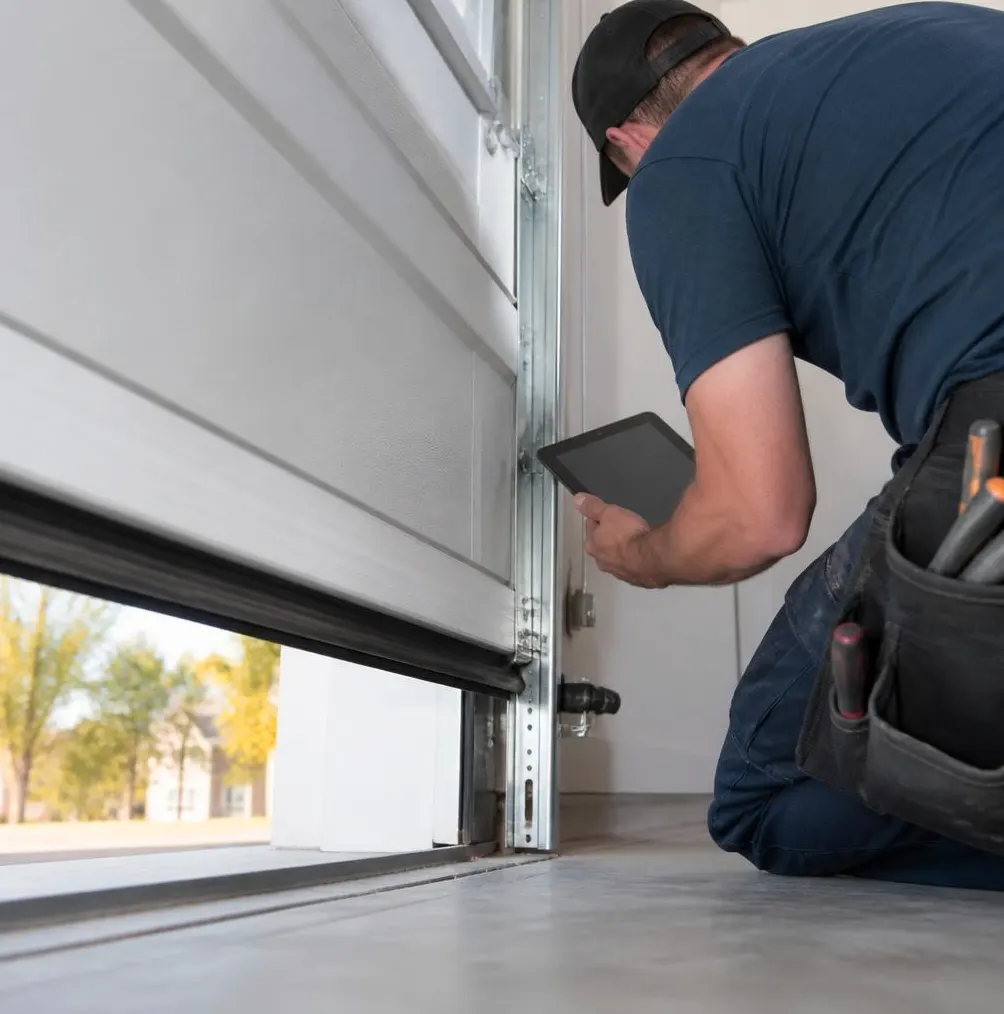
Short Answer: Check Your Panels, Tracks, and Backup Power Before the Next Storm Rolls In
If a storm is in the forecast, the fastest things you can do are: inspect door panels for dents or warping, make sure the tracks and rollers are tight and lubricated, confirm the auto-reverse safety feature works, and have a plan for what happens if the power goes out mid-storm. That covers the basics. The rest of this is about why those steps matter more than most homeowners realize, especially with the mix of older and newer housing stock common around Harford County.
Why the Garage Door Is a Home's Weakest Wall
Most exterior walls are solid, braced, and tied into the frame of the house. A garage door is not. It's a large moving panel, usually the biggest single opening in the entire structure, held in place by tracks, rollers, and a spring system rather than studs and sheathing. When high wind hits a house, it creates pressure on the windward side and suction on the leeward side. A standard residential door is built to handle everyday use, not sustained wind loads or sudden gusts from a coastal storm pushing through the Chesapeake region.
When a garage door fails in wind, it usually buckles inward or blows outward, and once that happens, the wind has a direct path into the house. That pressure change can lift roof decking or blow out windows from the inside. This is the main reason insurers and builders treat garage doors as a structural weak point, not just an access point.
Older Homes Are Often More Exposed
Harford County has a real mix of older homes with original doors and newer construction with updated hardware. Older doors, especially ones installed before wind-load standards became common, often lack any internal bracing. If your door is original to a home built decades ago, it's worth having it evaluated specifically for wind resistance, not just general wear.
What Fall and Winter Storms Actually Do to a Garage Door
This area gets a specific mix of conditions that stress garage doors in different ways:
- Wind-driven rain forces water past weatherstripping that's cracked, flattened, or pulling away from the frame, leading to water intrusion along the slab.
- Sudden gusts from coastal storms put repeated stress on tracks and hinges, loosening bolts over time even if the door never fully fails.
- Temperature swings between a wet fall and the first hard freeze can make metal brittle and rubber seals stiff, so parts that flexed fine in September may crack in December.
None of this requires a named hurricane. A strong line of thunderstorms or a winter nor'easter moving through is enough to expose a door that's already weakened.
Steps to Actually Storm-Proof Your Garage Door
1. Inspect and Tighten Hardware
Walk the full length of both tracks and check that mounting brackets are snug against the frame. Loose lag screws are one of the most common failure points in wind events, and they're an easy fix before a storm, not during one.
2. Check Panels for Existing Damage
A dent or warp might look cosmetic, but it changes how the panel distributes wind pressure. A door that's already slightly bowed is far more likely to fail under load than one that's flat and true.
3. Reinforce if the Door Lacks Bracing
Retrofit bracing kits exist for doors that weren't originally built to a wind rating. These typically run in the range of a few hundred dollars installed, which is modest compared to repairing water and structural damage after a blowout. If you're due for a new door anyway, wind-rated models are worth the upgrade, particularly on homes with larger door openings.
4. Service the Opener and Plan for Power Outages
Heavy rain and wind here often come with power outages. Know how to manually release your opener so you can close the door by hand if the power drops while it's open. If you rely on the garage as a secondary entrance, a battery backup for the opener is a reasonable investment.
5. Replace Weatherstripping Before It Fails Completely
Bottom seals and side weatherstripping that are cracked, flattened, or gapping should be replaced before storm season gets going, not after you've already got water on the garage floor. This is inexpensive and takes very little time compared to drying out a flooded garage.
6. Don't Ignore a Noisy or Unbalanced Door
A door that shudders, grinds, or seems to struggle on the track is telling you something is already under strain. Wind just finds whatever weakness already exists and makes it worse.
When to Call Abingdon Garage Door
If your door has visible dents, won't balance correctly, the tracks look loose, or you're not sure whether it has any wind bracing at all, that's worth a professional look before the next storm, not after. Our garage door maintenance service covers hardware tightening, track alignment, and spring tension checks, the kind of inspection that catches a weak point before wind does. If a storm has already caused damage, or a spring lets go under the extra stress, our emergency garage door service gets a technician out to secure the opening and get it repaired properly, not just patched.
If you're in Abingdon, Bel Air, Edgewood, Fallston, Joppa, Havre de Grace, Aberdeen, or Perry Hall and want your garage door checked before the next round of fall storms, call Abingdon Garage Door. We show up when we say we will.